

Before You Remap Your Car: The 15-Point ECU Remapping Health Check Every Vehicle Should Pass
A Stage 1 ECU remap should not be used to hide an existing mechanical problem.
In fact, one of the most important parts of professional ECU tuning happens before any modified software is written to the vehicle.
A turbocharger that is already struggling, a small boost leak, weak ignition components, an overloaded diesel particulate filter or incorrect sensor data may be barely noticeable during normal driving. Once additional torque, boost or engine load is requested, however, an existing weakness can become much more obvious.
That does not mean ECU remapping automatically damages engines. It means the condition of the vehicle matters.
For cars manufactured between 2010 and 2022—particularly modern turbocharged petrol and diesel vehicles—a proper pre-remap assessment should look beyond whether the dashboard currently has a warning light.
This guide explains the checks we believe should be considered before performance ECU calibration.
Why Diagnostics Before ECU Remapping Matter
Modern engine management systems constantly calculate how much air, fuel, ignition timing and boost the engine should use.
They rely on information from multiple sensors and control systems.
Depending on the vehicle, these can include:
- Mass airflow or manifold pressure sensors
- Intake-air temperature sensors
- Lambda or oxygen sensors
- Knock sensors
- Fuel-pressure sensors
- Boost-pressure control systems
- Exhaust-temperature sensors
- DPF differential-pressure sensors
- EGR systems
- Variable turbocharger actuators
A fault does not always produce an immediate dashboard warning.
Some problems develop gradually.
For example, an intake leak may force the ECU to make fuel corrections. A weak ignition coil may only misfire under high cylinder load. A turbo actuator may work adequately at normal boost but struggle when higher boost pressure is requested.
Bosch diagnostic information highlights an important principle: lambda and mixture-related fault codes do not necessarily mean the oxygen sensor itself has failed. Intake or exhaust leaks, incorrect fuel pressure, injector problems and other sensor inputs can all influence the values seen by the ECU. why simply checking whether the engine-management light is off is not a complete pre-remap assessment.
The 15-Point Pre-Remap Health Check
The following framework can be used as a practical reference before tuning a modern turbocharged petrol or diesel vehicle.
1. Perform a Full Diagnostic Scan
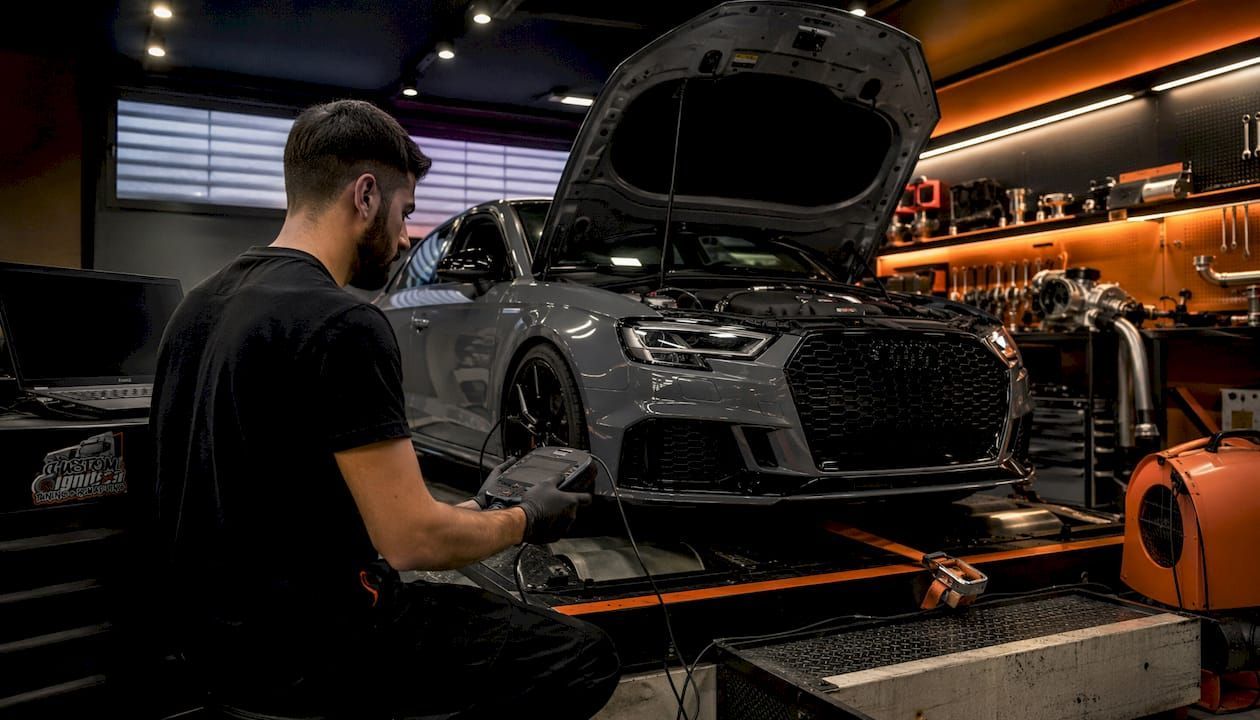
The first step should be to scan the relevant control modules.
At minimum, attention should be given to the:
- Engine ECU
- Transmission control module where applicable
- Emissions-related systems
- Fuel and boost-control faults
Stored, pending and intermittent faults can all provide useful information.
A car may have no warning lights yet still contain historic or intermittent diagnostic trouble codes.
Modern professional diagnostic systems can also analyse live data rather than simply reading and clearing fault codes. Bosch describes functions including reading actual values, actuator testing and system diagnostics as part of modern ECU troubleshooting. pping rule:
Diagnose unexplained faults before increasing engine output.
Deleting a fault code is not the same as fixing its cause.
2. Check Service and Maintenance Condition
Performance tuning should begin with basic mechanical health.
Important items include:
- Correct engine-oil specification
- Appropriate oil level
- Oil-change history
- Air-filter condition
- Fuel-filter condition on applicable vehicles
- Spark-plug condition on petrol engines
- Coolant condition and level
A heavily overdue service is a poor starting point for performance calibration.
Oil condition is particularly important on turbocharged engines because the turbocharger depends on a reliable supply of correctly specified lubricant.
3. Inspect the Turbocharger System
On a turbocharged vehicle, the turbocharger and its supporting systems are central to any Stage 1 calibration.
Checks should consider:
- Unusual turbo noise
- Excessive oil consumption
- Visible oil leakage
- Damaged boost hoses
- Loose intercooler connections
- Actuator or wastegate problems
- Abnormal smoke
A common mistake is to assume that visible oil near a turbo automatically means the turbo itself has failed.
Garrett Motion notes that turbocharger oil leakage can have several underlying causes and that diagnosis should consider the complete installation and operating conditions rather than automatically blaming the turbocharger. e diagnostic approach should apply before tuning.
4. Check the Intake System for Boost Leaks
A small boost leak can significantly affect how a turbocharged engine behaves.
Potential leak points include:
- Intercooler hoses
- Charge pipes
- Hose clips
- Intake-manifold seals
- Turbo outlet connections
- Diverter or recirculation valves
A leaking system may cause the turbocharger to work harder to achieve requested pressure.
The ECU may also make compensations that hide the problem during normal driving.
Increasing requested load without identifying the leak first is poor tuning practice.
5. Review Live Boost Data
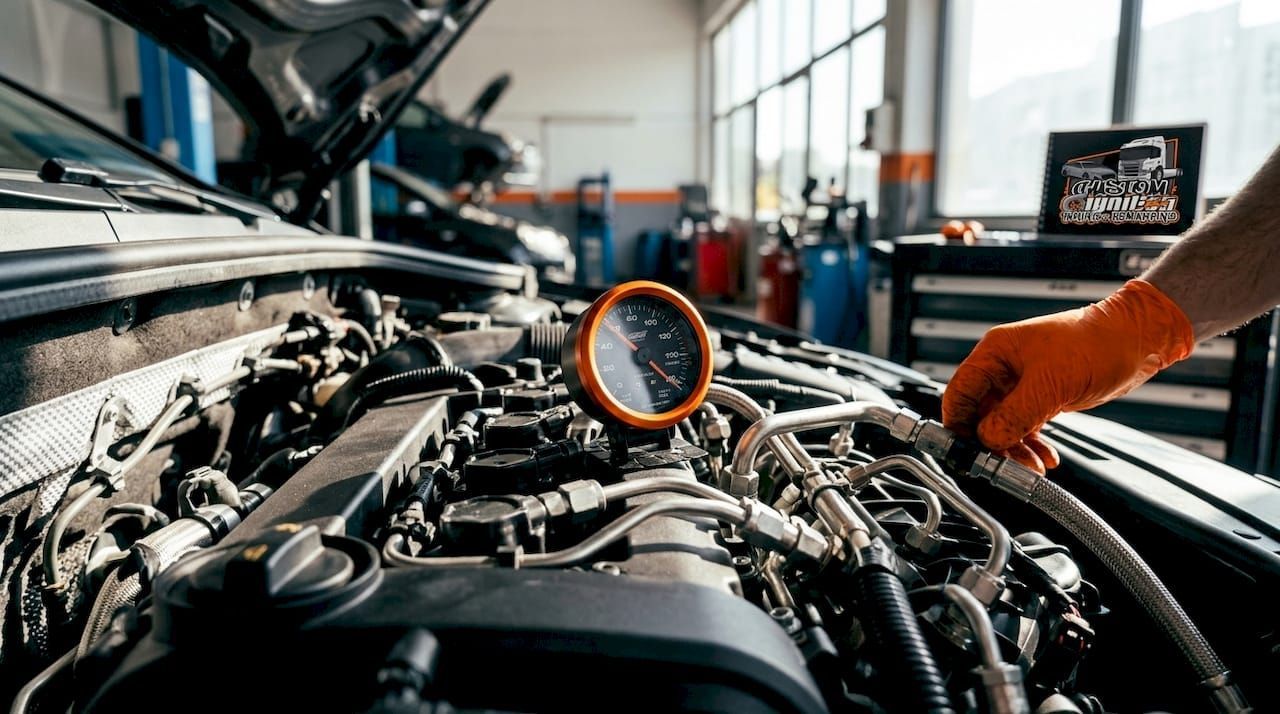
Where appropriate, actual boost pressure should be compared with requested or target boost.
The exact parameters vary by manufacturer and ECU.
What matters is whether the boost-control system behaves logically.
Large or inconsistent deviations may point toward:
- Boost leaks
- Wastegate problems
- Variable-geometry turbo issues
- Solenoid-control faults
- Sensor problems
A remap should not simply increase boost targets to compensate for a system that cannot correctly reach its original targets.
6. Check Fuel-System Health
More engine output generally requires the fuel system to operate correctly under increased demand.
Depending on the engine, relevant checks may include:
- Low-pressure fuel supply
- High-pressure fuel-rail behaviour
- Injector correction values
- Fuel-pressure deviations
- Fuel quality
The exact diagnostic values are manufacturer- and engine-specific.
There is no universal fuel-pressure figure that proves every vehicle is healthy.
That is why vehicle-specific data interpretation matters.
7. Check Petrol Ignition Health
Turbocharged petrol engines can expose weak ignition components very quickly when cylinder pressure increases.
Important components include:
- Spark plugs
- Ignition coils
- Plug gaps
- Wiring and connectors
A vehicle that drives normally at light throttle may misfire under high boost.
Where the manufacturer specifies a particular spark-plug type or replacement interval, those requirements should be respected.
A remap should never be used as a substitute for repairing an ignition problem.
8. Review Fuel Trims and Lambda Behaviour
Petrol engines use oxygen-sensor feedback and fuel adaptations to maintain correct combustion.
Abnormal corrections can indicate issues such as:
- Intake leaks
- Fuel-delivery problems
- Injector problems
- Airflow measurement errors
- Exhaust leaks
Bosch specifically notes that lambda-related diagnostic symptoms can originate from intake or exhaust leaks, fuel-pressure problems, injectors and other engine-management inputs. explained corrections deserve investigation before tuning.
9. Evaluate Airflow and Sensor Plausibility
A sensor does not have to be completely dead to create a problem.
An airflow sensor, manifold-pressure sensor or temperature sensor may still provide a signal while reporting values that are inaccurate.
This is why technicians should look for plausibility, not just fault codes.
Ask:
Does intake temperature make sense for ambient conditions?
Does airflow increase logically with engine load?
Does manifold pressure behave correctly?
Are sensor values stable rather than jumping unrealistically?
This becomes particularly important when ECU calibration relies heavily on those measurements.
10. Check Cooling-System Performance
Greece presents an important tuning consideration: temperature.
During summer, ambient temperatures in Attica can be very different from cool-weather tuning conditions elsewhere in Europe.
Hot intake air reduces air density and increases thermal stress.
Before remapping, the cooling system should therefore be healthy.
Consider:
- Engine coolant temperature
- Radiator condition
- Cooling fans
- Thermostat operation
- Coolant level
- Signs of overheating
A calibration suitable for a daily-driven vehicle should retain sensible thermal protection.
The goal is not simply to produce the highest possible peak number.
11. Assess Intercooler and Intake Temperatures
Turbocharging compresses intake air, which raises its temperature.
The intercooler's job is to remove some of this heat before the air reaches the engine.
During repeated acceleration or hot summer driving, intake temperatures may rise significantly.
This phenomenon is commonly called heat soak.
For drivers in Athens and Attica, this matters particularly during:
- Summer traffic
- Repeated acceleration
- Mountain driving
- Long uphill sections
- Heavy vehicle loads
A car that performs strongly during one cool acceleration run may behave very differently after sitting in 35°C-plus traffic.
A responsible road-car calibration should account for real operating conditions, not just ideal conditions.
12. Check DPF Condition on Diesel Vehicles
For a diesel vehicle fitted with a diesel particulate filter, DPF condition deserves attention before increasing torque.
Useful diagnostic information can include:
- Calculated soot loading
- Differential pressure
- Regeneration history
- Exhaust-temperature behaviour
- Relevant fault codes
A DPF traps particulate matter and relies on regeneration strategies to manage accumulated soot. Bosch describes particulate monitoring as an important part of the exhaust-treatment system. this matters in Greece
A diesel vehicle used mainly for short journeys around Athens may experience very different operating conditions from one frequently driven long distances on motorways.
Repeated low-speed, stop-start trips can make favourable regeneration conditions harder to achieve.
The correct response to a DPF problem is diagnosis—not automatically more engine software.
13. Check EGR and Air-Path Operation on Diesel Engines
Exhaust gas recirculation forms part of the diesel engine's airflow and emissions-control strategy.
EGR-related problems can influence:
- Airflow readings
- Combustion behaviour
- Soot production
- Engine response
Carbon contamination, actuator faults or airflow discrepancies should be investigated rather than ignored.
A tuning file cannot mechanically repair a sticking valve or heavily contaminated intake system.
14. Assess the Gearbox and Clutch
Engine torque does not exist in isolation.
It must pass through the:
- Clutch
- Dual-mass flywheel where fitted
- Automatic transmission
- Dual-clutch gearbox
- Driveshafts and driveline
A clutch that already slips at standard torque is unlikely to become healthier after torque is increased.
Similarly, some automatic and dual-clutch transmissions have software-based torque-management strategies.
Ignition Tuning & Remapping Greece offers both engine ECU and TCU-related tuning services, but the appropriate solution depends on the actual vehicle and transmission. vative engine calibration should respect the realistic capability and condition of the drivetrain.
15. Establish a Baseline Before Changing Anything
One of the most useful principles in professional diagnosis is simple:
Know how the vehicle behaves before you modify it.
Depending on the vehicle and available equipment, baseline information can include:
- Diagnostic scan results
- Live sensor values
- Requested versus actual boost
- Fuel-pressure behaviour
- Injector corrections
- DPF data
- Road-test observations
Without a baseline, it becomes harder to determine whether a problem was already present or appeared after calibration.
Pre-Remap Reference Table
SystemWhat Should Be Checked?Warning SignsWhy It MattersECU diagnosticsStored, pending and active DTCsRepeated or unexplained faultsMay reveal hidden mechanical or electrical problemsEngine oilLevel, condition, specificationLow level, contamination, overdue serviceCritical for engine and turbo lubricationTurbo systemNoise, oil leakage, actuator behaviourWhistle changes, smoke, boost deviationHigher load increases turbo demandIntake systemPipes, hoses, intercooler jointsOil mist, split hoses, loose clampsBoost leaks distort airflow and boost controlFuel systemPressure, corrections, injector behaviourPressure deviation, poor starting, hesitationIncreased load requires stable fuel deliveryPetrol ignitionPlugs, coils, misfire dataMisfire under loadWeak ignition often appears at higher cylinder pressureSensorsMAF/MAP/IAT/lambda plausibilityIllogical or unstable readingsECU calculations depend on accurate dataCooling systemCoolant, fans, thermostat, temperaturesOverheating or abnormal temperatureImportant in hot Greek operating conditionsDPFSoot load, pressure, regeneration behaviourFrequent regens, warning lights, high pressureExhaust restriction should be diagnosed before tuningEGR/air pathAirflow behaviour and faultsPoor response, airflow discrepancyAffects combustion and diesel air managementTransmissionClutch/gearbox conditionSlip, harsh shifts, existing faultsIncreased torque loads the drivetrainBaseline logsKey data before calibrationNo reference data availableHelps compare before-and-after behaviour
The key principle
A green light in one area does not prove the whole vehicle is ready.
The vehicle should be considered as a complete system.
Should a High-Mileage Car Be Remapped?
Mileage alone is not enough to answer this question.
A well-maintained vehicle with 180,000 km may be mechanically healthier than a neglected vehicle with 80,000 km.
More useful questions include:
- Has the vehicle been serviced correctly?
- Is it consuming oil?
- Does the turbo operate normally?
- Are there diagnostic faults?
- Is the DPF healthy?
- Does the clutch slip?
- Are fuel and ignition systems performing correctly?
Mechanical condition matters more than simply reading the number on the odometer.
Older or higher-mileage vehicles may, however, justify a more conservative calibration.
Does a Stage 1 Remap Need New Hardware?
Generally, the concept of Stage 1 tuning is to calibrate a mechanically standard or near-standard vehicle within sensible limits.
However, the term “Stage 1” is not an engineering standard.
Different tuning companies may use the term differently.
The actual safe calibration depends on:
- Engine version
- ECU type
- Turbocharger
- Fuel system
- Transmission
- Fuel used
- Vehicle condition
- Factory software version
This is why quoting a universal percentage increase for every Stage 1 vehicle is misleading.
Why Maximum Power Should Not Always Be the Goal
Suppose two calibrations are possible.
One produces a slightly larger headline number but pushes the turbo, fuel system or transmission closer to its practical limit.
The other produces slightly less peak power but maintains better thermal margin and smoother torque delivery.
For a daily-driven vehicle, the second calibration may be the better engineering decision.
Good ECU tuning is not simply:
“How much power can we add?”
A better question is:
“What level of performance is appropriate for this specific vehicle, its mechanical condition and how it will actually be used?”
That distinction becomes particularly important in Greece, where high summer temperatures, mountain routes, urban traffic and extended high-load driving can create demanding real-world conditions.
A Warning About Using Remapping to Hide Mechanical Problems
ECU software is extremely powerful.
But software cannot physically repair:
- A worn turbocharger
- A leaking intercooler
- A slipping clutch
- A blocked filter
- A failing injector
- A weak fuel pump
- A damaged sensor
- A cooling-system problem
Changing software to mask symptoms without diagnosing the cause can turn a manageable fault into a more expensive problem.
Professional tuning begins with understanding the vehicle.
The Ignition Pre-Remap Principle
A useful way to remember the process is:
DIAGNOSE → VERIFY → CALIBRATE → VALIDATE
Diagnose
Look for faults, symptoms and abnormal data.
Verify
Confirm that the engine, turbo, fuel, emissions and drivetrain systems are operating correctly.
Calibrate
Apply software appropriate to the specific engine, ECU, hardware, fuel and intended use.
Validate
Confirm that the vehicle behaves correctly after programming.
This four-stage framework is more valuable than choosing a tuning file purely because it advertises the largest horsepower figure.
Conclusion: A Healthy Car Is the Best Starting Point for ECU Tuning
ECU remapping can significantly change the way a turbocharged petrol or diesel vehicle responds, particularly through improved torque delivery and throttle response.
But the quality of the result depends on more than the software.
The vehicle itself must be ready.
A proper pre-remap health assessment helps identify mechanical weaknesses before additional load is introduced and provides a baseline from which the tuning result can be evaluated.
For motorists in Athens and across Attica considering Stage 1 ECU remapping, the best first question is therefore not:
“How much horsepower will I gain?”
It is:
“Is my vehicle healthy enough to tune properly?”
Ignition Tuning & Remapping Greece provides ECU remapping and vehicle-specific tuning services throughout Attica, including mobile service options. Performance expectations and the appropriate calibration should always be assessed according to the specific engine, ECU, transmission, fuel and mechanical condition of the vehicle. . FAQ
Can you remap a car that has an engine warning light?
The underlying fault should normally be diagnosed before performance tuning. A warning light may indicate a problem involving boost, fuel delivery, emissions equipment, sensors or another system that could affect the safety or quality of the calibration.
Should I service my car before a Stage 1 remap?
A vehicle that is overdue for servicing should generally be brought up to appropriate maintenance condition first. Correct oil, filters, spark plugs where applicable and basic mechanical health provide a much better starting point for tuning.
Can a remap cause a weak clutch to slip?
Increasing engine torque can expose a clutch that is already worn or close to its holding limit. A clutch that begins slipping after a torque increase may have had limited remaining capacity beforehand.
Can you remap a high-mileage car?
Potentially, yes. Mileage alone does not determine whether a car is suitable. Mechanical condition, maintenance history, turbo health, fuel-system performance, diagnostics and drivetrain condition are more useful indicators.
Should the DPF be checked before remapping a diesel?
Yes. DPF loading, differential pressure, regeneration behaviour and related faults can provide important information about the condition of a modern diesel vehicle.
Does having no fault codes mean the car is healthy?
Not necessarily. Some problems may not yet meet the conditions required to trigger a diagnostic trouble code. Live data, mechanical inspection and road-test behaviour can reveal issues that a simple code scan may miss.
Does every Stage 1 remap produce the same percentage power gain?
No. Gains vary considerably between engines, ECU strategies, turbochargers, fuel systems, transmissions, fuel grades and mechanical condition. Universal percentage claims should be treated cautiously.
Is ECU remapping harder on the turbo?
A performance calibration can increase turbocharger demand depending on how boost, torque and airflow are calibrated. This is one reason turbo health, boost control and thermal limits should be considered before tuning.